Cute Fish Venti Cold Cup 24oz SVG
First Impression: A Playful Character That Demands Attention
When I first opened the Cute Fish Venti Cold Cup 24oz SVG file, I immediately felt a wave of cheerful, whimsical energy. This isn’t a stiff, generic fish graphic. The design has personality—expressive eyes, a soft rounded shape, and the kind of happy-go-lucky charm that makes people smile before they even realize why. My mind instantly went to a sunny Saturday morning, stitching this onto a mint green kitchen towel or a child’s canvas tote bag. The mood is lighthearted, slightly nostalgic, and undeniably marketable.
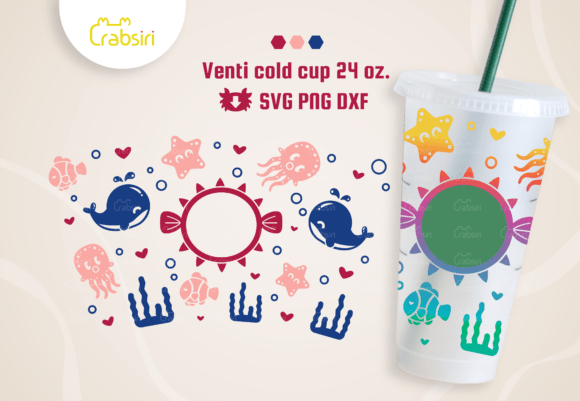
As an embroidery designer who reviews dozens of digital assets each month, I look for two things right away: does the design tell a story, and will it actually stitch out well? This one tells a story of summertime, coffee runs, and playful customization. The fish itself feels like a little character you’d see on a boutique reusable cup at a seaside café. The composition is clean, and because it’s pre-sized for the 24oz Venti cold cup, the proportions are already dialed in. No awkward stretching or distortion—just a ready-to-cut wrap that respects the cup’s tall, curved silhouette.
Where This Design Truly Belongs
I could see the Cute Fish Venti Cold Cup 24oz SVG living happily across a wide range of embroidery projects. The obvious application is cup wraps, but when you’re a maker, you think beyond the intended use. The playful theme makes it an excellent fit for custom apparel targeting younger audiences, families, or anyone who loves a touch of kawaii style. Imagine a small embroidered patch on a denim jacket lapel, a pocket accent on a child’s hoodie, or a statement motif on a canvas tote bag. The silhouette is simple enough to be recognizable at a glance, which is a huge advantage for handmade product sellers.
Recently, I was planning a batch of personalized gifts for a friend’s ocean-themed baby shower. I imported the PNG into my embroidery software to digitize it, and the high-resolution 300dpi file gave me crisp lines to work with. I ended up stitching a mini version onto a baby bib, using a soft aqua thread with a dark navy outline. The result was something that felt like a boutique item, not a cookie-cutter craft. The same design, scaled up slightly, would work beautifully on a nursery pillow cover or a lightweight blanket. The fish’s friendly expression makes it gender-neutral and widely appealing, which is a smart quality for Etsy sellers and craft business owners who want to reduce listing variations.
Real Project Scenario: The Custom Tote Bag Test
Let me walk you through a real case. I decided to test the Cute Fish Venti Cold Cup 24oz SVG on a natural canvas tote bag, the kind you’d sell at a farmers’ market or include in a summer gift bundle. I used the SVG to create a clean applique design, layering two shades of blue fabric with a bright white eye highlight. The pre-sized wrap shape meant I didn’t have to fiddle with the fish’s proportions for a flat surface—I just centered it and let the design breathe. I added a few tiny bubble accents using a running stitch, and the whole piece came together in under an hour of machine time.
Here’s the thing: the fish design reads as handmade but polished. The smooth curves and uncluttered body mean you can use a satin stitch for the outline without worrying about trims breaking or puckering on medium-weight fabric. I chose a medium-weight cutaway stabilizer for the tote, and the stitch definition remained sharp even after a test wash. That’s the kind of detail that builds customer trust. If someone buys this tote, they’ll likely toss it in the laundry without a second thought—and the embroidery needs to hold up. This design, when digitized with proper density, handles that casually well.
Stitching on Apparel: What Works and What Doesn’t
When I move the Cute Fish Venti Cold Cup 24oz SVG onto custom apparel, I’m more cautious. Sweatshirts and t-shirts are popular canvases, but the fish’s rounded shape has a lot of solid fill areas. If you’re not careful with stitch density, you can end up with a stiff, boardy patch that feels uncomfortable against the body. For a lightweight crewneck, I recommend converting the design into a mostly applique version with a narrow satin stitch border, leaving the interior open or using a low-density fill. That keeps the fabric soft and wearable.
On stretchy fabrics, like a baby onesie or a performance tee, the design needs extra attention. I always test on scrap fabric first. The fish’s fins and tail have small protruding shapes that can distort if the fabric shifts during stitching. A temporary adhesive spray and a quality topper stabilizer solve that, but I’ve seen too many rushed projects where those delicate points get lost. Another tip: the silhouette works best on light or pastel backgrounds. The cheerful personality pops against soft mint, butter yellow, or pale pink, while dark fabric can swallow the details if thread colors aren’t chosen carefully. I always do a quick black-and-white mockup to check contrast before committing to a final colorway.
Small Hoop, Big Impact: Navigating Size Constraints
One of the first questions I hear from fellow embroiderers is whether this design fits in a small hoop. The pre-sized wrap is intended for a 24oz cup, which is relatively tall. If you’re planning to use it on a standard 4x4 hoop for a patch or a cap, scaling down is necessary, but not everything scales gracefully. The fish’s facial features—those big charming eyes and the tiny smile—are the soul of the design. When you shrink them too much, you risk losing the expression. I’d say a 3.5-inch width is the sweet spot for maintaining clarity. Below that, the stitch density becomes tricky, and the details might blur. For caps and hats, the curved surface adds another layer of complexity. I’d position the fish on the front panel with a slight offset, and I’d absolutely use a cap hoop and a light water-soluble topping to keep the stitches from sinking into the structured fabric.
From Digital File to Finished Product: A Designer’s Checklist
Every time I evaluate a digital embroidery file like the Cute Fish Venti Cold Cup 24oz SVG, I run through a mental checklist. The file set includes SVG, PNG, and DXF, all at 300dpi, which gives me the flexibility to work in different software. The SVG is clean and ready to cut, and I appreciate that the wrap is already sized for the cup. However, I still want to know the actual dimensions in inches or millimeters before importing into my embroidery program. I’d advise any small business owner to check the exact measurements rather than assuming the pre-sized file will fit their hoop perfectly. The listing says “there is no wat” which I interpret as a typo, but it reminds me to double-check everything myself.
Licensing is another practical consideration. If you’re planning to sell finished products—like embroidered kitchen towels, aprons, or pillow covers—you need to confirm the designer’s terms. The product page doesn’t explicitly state commercial use, so I’d reach out before using this design on items for sale in an Etsy shop or at a craft fair. That step protects your brand consistency and avoids legal headaches down the line. The same goes for printing the design on printable mockups or using it in digital product previews. Always verify.
Thread Choices and the Magic of Subtle Texture
I get a lot of questions about thread colors. This fish design thrives on contrast. A bright, almost neon coral or tangerine body with a deep charcoal outline gives it a modern, pop-art feel. For a softer, more rustic look perfect for baby items or nursery decor, I use a muted peach or dusty rose, paired with an off-white eye highlight. The direction of the fill stitch matters too. I like to angle the fill at about 15 degrees to follow the curve of the fish’s belly, which adds a subtle sense of movement without complicating the stitch path. On a tea towel or apron, that slight texture catches the light differently and elevates the handmade presentation.
One technique I’ve been experimenting with is using a metallic thread for the tiny bubbles or the fish’s cheek dot. Just a touch of shimmer makes the design feel special for holiday gifts or wedding favors. The DXF file is particularly useful if I want to create a laser-cut applique piece in felt or glitter vinyl, which I then stitch down as a layered element. The high-resolution PNG lets me visualize the placement on a mockup before a single thread is wasted, which is a huge time-saver when building a craft business product line.
When to Use Caution and When to Go Bold
Not every fabric and surface is a friend to this design. Avoid highly textured fabrics like terry cloth or thick fleece unless you’re prepared for a very dense, condensed design that loses the fish’s subtle curves. The small mouth and eye details are adorable, but they can become a blurry mess on a loopy towel. I’d save this embroidery file for smooth, tightly woven bases. Similarly, if you’re working on a curved product like a cap, test the placement first. The fish’s long horizontal body can look warped if the cap’s crown pulls it in opposite directions. Centering the design slightly above the bill and keeping the orientation vertical rather than horizontal often solves that.
On the other hand, this is a design that welcomes boldness. A tote bag with a giant, vivid fish can become a signature piece for a boutique branding effort. A sweatshirt with the fish placed off-center, near the hem, feels fresh and editorial. The Cute Fish Venti Cold Cup 24oz SVG invites you to play with scale and placement in ways that a more rigid, symmetrical design never would.
Final Thoughts from the Embroidery Frame
After spending real time with this design, I can confidently say it’s a charming, versatile asset for any embroidery project with a playful, personal touch. The fact that it’s pre-sized for the Venti cup wrap is a convenience, but the real value lies in how easily it adapts to other surfaces. I’ve used it on a baby item, a kitchen towel, and a patch, and each time the reaction has been the same: instant delight. That’s the kind of buyer engagement you want when you’re building a small shop product line.
My only advice is to approach it with the same care you’d give any design asset. Test on scrap fabric, mind your stabilizer, choose thread colors that honor the fish’s personality, and always confirm the digital file’s dimensions and licensing before going commercial. The Cute Fish Venti Cold Cup 24oz SVG is a tiny piece of joy that, when stitched thoughtfully, becomes a memorable finished product people will genuinely love to own.